When most people think of cricket, they picture quiet concentration, tense strategy, and long hours on the pitch. But in the Caribbean, cricket is anything but ordinary. It’s a vibrant celebration of sport, culture, and community, blending athletic skill with music, color, and a unique sense of joy.
Calypso Cricket: Cricket with Flair
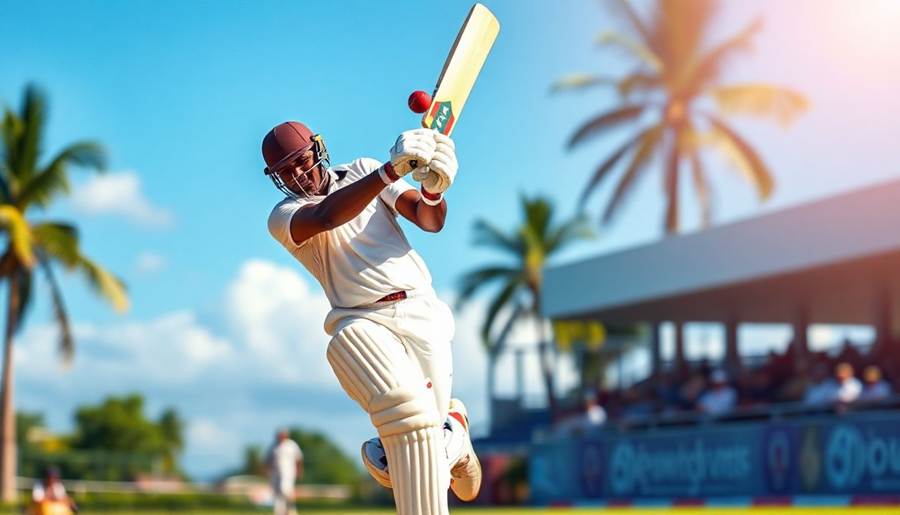
Caribbean cricket is often called “Calypso Cricket”—a term that perfectly captures the style, rhythm, and flair of the players. From the effortless elegance of a masterful cover drive to the sheer power of a booming six, West Indian cricketers have long combined skill with entertainment. Fast bowlers bring thunder to the pitch, batsmen play with artistry, and fielders dazzle with acrobatic catches. This isn’t just cricket—it’s a performance, a display of personality and passion.
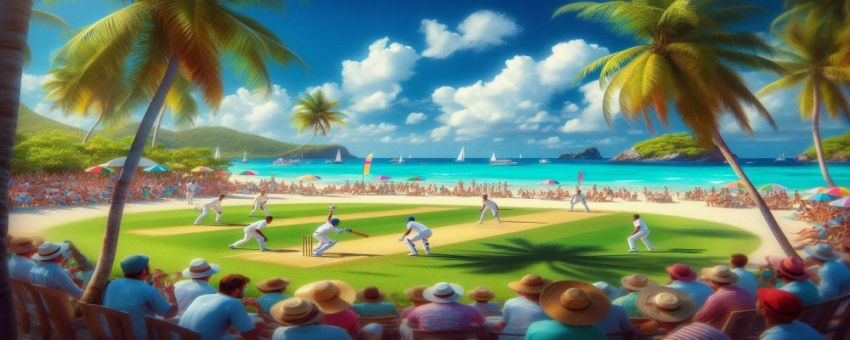
The Beaches: A Stunning Backdrop
Few places in the world can claim cricket grounds with such breathtaking scenery. Matches often take place near sun-kissed beaches, with the turquoise waters and golden sands providing a postcard-perfect backdrop. Whether it’s a casual local game or a high-stakes international match, the natural beauty of the Caribbean makes cricket here a feast for both the eyes and the spirit.
The Party Atmosphere
Cricket in the Caribbean is not just about the action on the pitch—it’s a festival. Fans bring music, dancing, and a carnival-like energy to the stands. Steel drums, soca, reggae, and calypso music pulse through the stadiums, turning every game into a lively, joyous experience. Even during tense matches, there’s laughter, singing, and celebration—a reminder that cricket here is as much about culture as it is about competition.
The Fans: Heart and Soul of the Game
The West Indies’ fans are passionate, knowledgeable, and full of character. They live and breathe cricket, and their energy is contagious. Whether cheering for a hometown hero or a national star, they turn every match into a communal celebration, showing how deeply cricket is woven into the Caribbean identity. The connection between players and fans is personal and intense—one reason why visiting a Caribbean cricket ground feels unlike any other sporting experience.
Why Caribbean Cricket Stands Out
It’s the blend of athleticism, artistry, culture, and celebration that makes Caribbean cricket truly unique. Here, the game is alive with music, color, and community spirit. It’s not just a match—it’s a festival that brings together history, identity, and joy, making it a sporting experience that leaves a lasting impression on anyone lucky enough to witness it.
Caribbean cricket isn’t just about who wins or loses—it’s about living the game, celebrating culture, and feeling the pulse of the islands with every ball bowled and every six struck.
Highlights: World’s richest and most popular T20 league, massive global TV viewership.
Big Bash League (BBL – Australia)
Established: 2011
Format: 8 city-based franchises.
Highlights: Family-friendly entertainment, strong domestic player focus, growing international attraction.
Pakistan Super League (PSL – Pakistan)
Established: 2015
Format: 6 franchises.
Highlights: Known for producing young local talent, highly competitive pace bowling stocks.
Caribbean Premier League (CPL – West Indies)
Established: 2013
Format: 6 franchises across the Caribbean.
Highlights: Festive, carnival-like atmosphere, spotlight for Caribbean talent.
Bangladesh Premier League (BPL – Bangladesh)
Established: 2012
Format: 7 franchises.
Highlights: Strong local fan following, opportunity for Bangladeshi players to play alongside global stars.
SA20 (South Africa)
Established: 2023
Format: 6 franchises (all IPL-owned).
Highlights: Revived South African cricket financially, blends IPL investment with local growth.
ILT20 (International League T20 – UAE)
Established: 2023
Format: 6 franchises.
Highlights: High salaries, many overseas players, backed by Emirates Cricket Board.
The Hundred (England & Wales)
Established: 2021
Format: 100-ball matches, 8 city-based teams.
Highlights: Innovative format targeting new audiences, strong push for women’s cricket.
Global T20 Canada / USA’s Major League Cricket (MLC)
Established: 2018 (Canada) / 2023 (USA).
Highlights: Expands cricket into North America, attractive pay packages, and international exposure.
💰 How T20 Formats Benefit Players
1. Financial Rewards
Lucrative Contracts: Players can earn millions in leagues like IPL and ILT20, often dwarfing national contracts.
Match Fees & Bonuses: Win bonuses, performance incentives, and sponsorship deals add to income.
Brand Endorsements: Exposure in high-profile leagues increases marketability for ads and sponsorships.
2. Professional Development
Exposure to Global Talent: Sharing dressing rooms with international stars sharpens skills and mindset.
High-Pressure Experience: Playing in front of huge crowds and TV audiences builds mental toughness.
Access to Best Coaches & Facilities: World-class support staff and analytics-driven training.
3. Career Security & Longevity
Alternative to National Contracts: Even players not picked for their countries can make a stable living.
Extended Careers: Veterans like Chris Gayle, Kieron Pollard, and AB de Villiers prolonged careers via T20 leagues.
Opportunities for Specialists: T20 creates roles for “impact” players—power hitters, mystery spinners, death bowlers.
4. Global Recognition
Fan Base Beyond Borders: A player from Afghanistan (e.g., Rashid Khan) becomes a global icon through T20 leagues.
Social Media Boost: League exposure boosts followership, which translates into commercial opportunities.
5. Flexibility & Freedom
Multiple Income Streams: Players can participate in different leagues year-round.
Less Physically Demanding: Compared to Tests, T20 matches are shorter, reducing wear and tear.
Platform for Young Talent: Domestic players get instant recognition and fast-tracked into national teams (e.g., Jasprit Bumrah via IPL).
⚖️ Balanced Perspective
Pros: Money, fame, opportunities, exposure, career longevity.
Cons: Risk of player burnout (too many leagues), conflict with national boards, prioritizing leagues over international duty.
✅ In Summary: T20 leagues like the IPL, BBL, CPL, and others have revolutionized cricket by creating a global marketplace for players. They provide not just unmatched financial benefits but also professional growth, international exposure, and long-term career security. For many modern cricketers, franchise T20 cricket is just as valuable—sometimes even more—than international cricket.
Cricket has always been called a “gentleman’s game,” but as formats have evolved, so have the demands on players. A century in a five-day Test match and a whirlwind 30 off 10 balls in a T20 game are both celebrated, but they come from vastly different skill sets.
So, what exactly separates a Test match specialist from a T20 master? Let’s break it down.
1. Batting Skills
Test Player
Built for patience and resilience.
Mastery of technique—tight defense, leaving the ball well, shot selection under pressure.
Big-hitting range—reverse sweeps, scoops, ramps, and switch-hits.
Strike rotation is as crucial as boundary-hitting.
Examples: Chris Gayle, Andre Russell, Suryakumar Yadav.
Comparison: Where the Test batter looks to “survive and build,” the T20 batter looks to “attack and maximize every ball.”
2. Bowling Skills
Test Bowler
Relies on consistency, patience, and endurance.
Uses swing, seam, and subtle variations to outthink the batter.
Plans dismissals over long spells.
Examples: James Anderson, Kemar Roach, Ravichandran Ashwin.
T20 Bowler
Relies on variety and deception.
Mixes pace, yorkers, slower balls, and wide deliveries.
Needs nerves of steel at the death overs.
Examples: Rashid Khan, Sunil Narine, Jasprit Bumrah.
Comparison: The Test bowler hunts with patience like a chess player, while the T20 bowler plays a high-speed poker game where one wrong delivery can cost the match.
3. Mental Approach
Test Player: Mindset of patience, discipline, and endurance. Ability to stay focused through long sessions and shifting conditions.
T20 Player: Mindset of aggression, adaptability, and split-second decision-making under pressure.
4. Physical Demands
Test Cricket: Stamina and fitness for long hours—running between wickets, bowling 20+ overs in a day, fielding for five days straight.
T20 Cricket: Explosiveness and athleticism—sprinting, diving, powerful shots, and delivering yorkers under fatigue.
5. Tactical Awareness
Test Player: Reads the game over sessions. Strategic declarations, field settings, and pacing the innings matter.
T20 Player: Thinks ball by ball. Field placements, match-ups (left-hand vs. right-hand, pace vs. spin), and run-rates dominate tactics.
⚖️ Balanced View
Neither format is “easier” than the other—they simply demand different strengths. Some rare players, like Virat Kohli, Ben Stokes, or Kane Williamson, manage to adapt across formats. But for most, excelling in one means tailoring their skills and mindset accordingly.
✨ Final Thought
A Test player is like a marathon runner, pacing themselves with endurance and technique. A T20 player is like a sprinter, relying on bursts of power and creativity.
Both are masters in their own arenas, and together, they make cricket the most diverse sport in the world—where patience and flair coexist.
It’s almost September, and if you’re like most people, you probably set goals in January—or maybe just last week—that you were excited to achieve. But here’s the big question: how’s it going so far?
Whether you’re on track, feeling stuck, or just getting started, the truth is this: it’s never too late to reset and realign. The important thing is not just setting goals, but setting them in a way that gives you the best possible chance of success.
Here are 6 powerful steps to help you write goals that work—and more importantly, achieve them.
Step 1: State Your Goal Positively
Your brain doesn’t process negatives well. If you say, “I don’t want to be late anymore,” guess what your brain hears? Late.
Instead, flip the script:
❌ I want to lose 5 kg.
✅ I want to be 65 kg by June.
Focus only on what you want to move toward, not what you’re trying to avoid.
Ask yourself:
What do I hope to change?
What outcome do I really want?
Step 2: Put Your Goal in Context
A goal has to make sense for you—your life, your situation, your values.
Ask yourself:
Where will this goal take me?
In what areas of my life will this goal matter most?
By when do I want it?
When a goal is grounded in your reality, it’s more likely to stick.
Step 3: Express Your Goal in Specific, Sensory Terms
What will you see, hear, and feel when you achieve your goal? Visualization isn’t daydreaming—it’s programming your brain to recognize success before it arrives.
Close your eyes and imagine:
What will I see when this goal becomes reality?
What sounds and feelings will confirm I’ve achieved it?
Your brain will start steering you in that direction.
Step 4: Choose a Goal You Can Fulfil Yourself
Your goal must depend on you, not other people. You can’t control traffic, the economy, or someone else’s choices—but you can control your own effort and mindset.
Ask:
Does this goal depend on me or someone else?
How much control do I really have?
What’s one thing I can take full responsibility for today?
Step 5: Evaluate Honestly the Effects of Achieving Your Goal
Sometimes success comes with trade-offs. A promotion may mean less family time. Breaking a habit might shake up your social circle.
Ask:
What will I gain—and what might I lose?
How will my life really change once I achieve this?
Am I prepared for those changes?
The more honest you are, the smoother the journey will be.
Step 6: Choose a Worthwhile Goal
Your goal should feel aligned with your values and purpose. Otherwise, even if you achieve it, it may feel empty.
Ask:
Is this worth the effort it will take?
Does this reflect who I want to be?
How will this matter in the bigger picture of my life?
When your goals connect to your identity, they become fuel for growth.
✈️ Final Word: Stay on Course
Think of yourself like a pilot. Did you know airplanes are off course more than 70% of the time? Yet they still arrive safely, because the pilot keeps making small adjustments.
Your goals work the same way. Don’t give up if you hit storms or detours—adjust, reset, and keep moving forward.
The most successful people aren’t the ones who never face obstacles. They’re the ones who stay clear on their goals and keep adjusting until they arrive.
So, here’s your reminder: 👉 Stay on course. 👉 Keep adjusting. 👉 Know what you want, and go for it.
Picture this: a young cricketer in St. Lucia, Pakistan, or Afghanistan, training on dusty grounds, dreaming of wearing national colors. For many, the path to international stardom once felt like climbing a mountain barefoot. But the rise of T20 franchise cricket has changed the game entirely. Today, a single auction call or franchise draft pick can transform a player’s life—both on and off the field.
Let’s take a tour of the T20 leagues across the world and explore how they have reshaped the lives of cricketers everywhere.
⚡ The Leagues That Rule the World
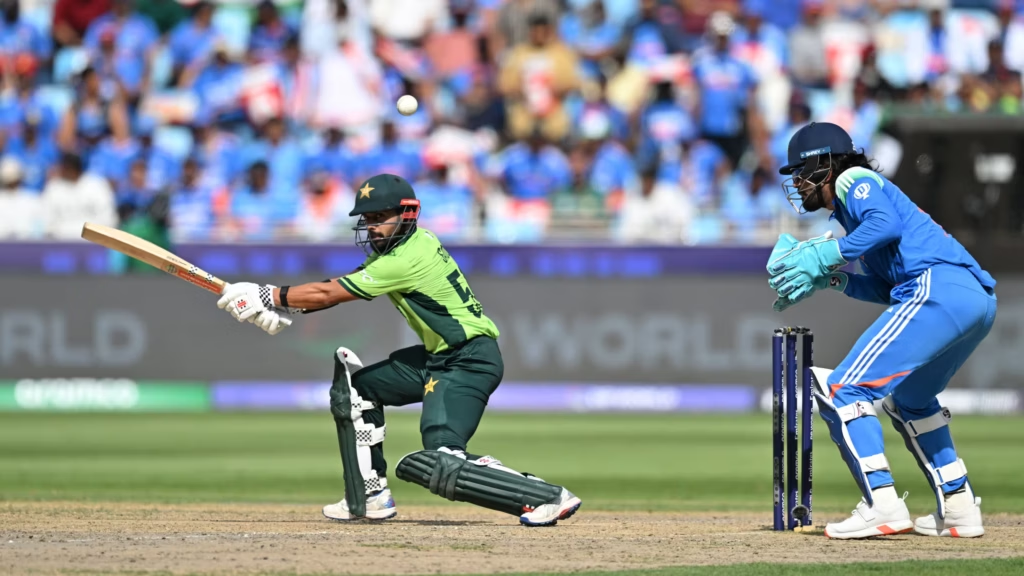
Indian Premier League (IPL – India): The crown jewel. Since 2008, the IPL has become cricket’s Hollywood—where stars are made, legends shine, and players earn life-changing sums.
Big Bash League (BBL – Australia): A family-friendly festival of cricket that has made household names out of young Aussies.
Pakistan Super League (PSL – Pakistan): A hotbed for raw pace and fearless hitting, giving the world players like Shaheen Afridi and Shadab Khan.
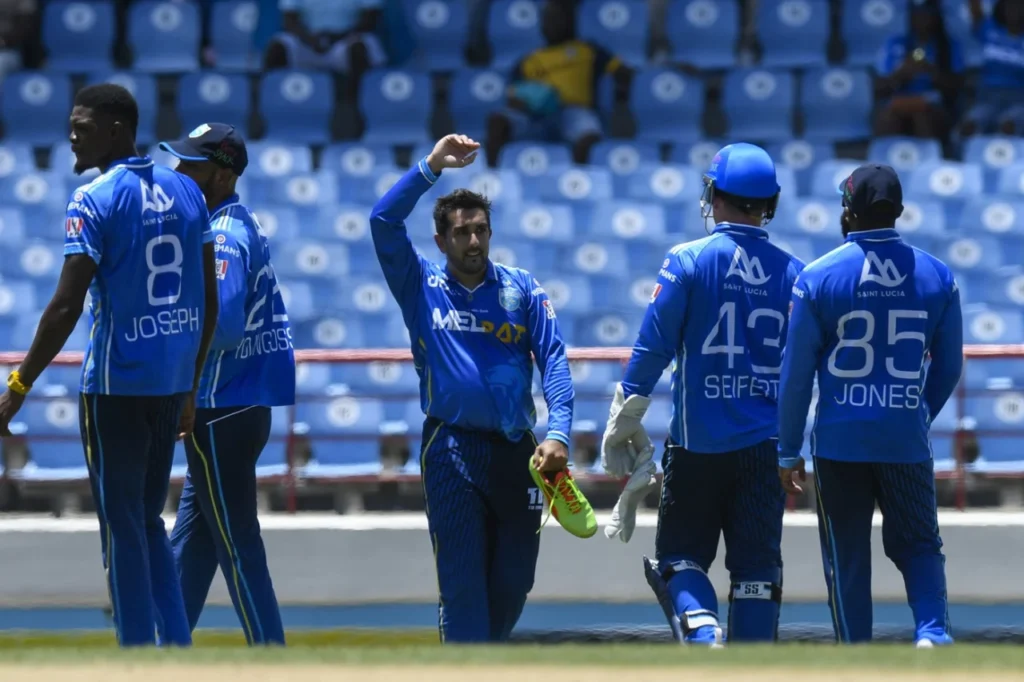
Caribbean Premier League (CPL – West Indies): More than cricket—it’s a carnival. The CPL is where Caribbean flair meets global stardom.
Bangladesh Premier League (BPL – Bangladesh): A showcase for local heroes alongside global stars.
SA20 (South Africa): Backed by IPL owners, it’s revitalizing South African cricket financially and professionally.
ILT20 (UAE): A magnet for overseas talent with hefty paychecks and global exposure.
The Hundred (England): An experimental 100-ball format, opening doors for a new audience while pushing women’s cricket into the spotlight.
Major League Cricket (USA) & Global T20 Canada: Expanding cricket’s footprint into new markets with exciting opportunities for players worldwide.
💰 Beyond the Boundaries: How Players Benefit
1. Financial Game-Changer
For many, a franchise contract means more than money—it means stability.
The IPL turned young players like Jasprit Bumrah into millionaires before they played 10 Tests.
Veterans like Chris Gayle and Kieron Pollard extended their careers by becoming T20 icons.
For players from smaller cricket nations—think Rashid Khan (Afghanistan)—leagues are a lifeline. Today, Rashid isn’t just a spinner; he’s a global brand.
2. A Global Classroom
Sharing a dressing room with MS Dhoni, Andre Russell, or AB de Villiers isn’t just a dream—it’s reality for many youngsters. Players learn faster, adapt quicker, and carry those lessons back to their national teams.
3. Security & Longevity
Not everyone makes it big in Tests or ODIs. But T20 has created space for specialists:
Power-hitters who can change games in 20 balls.
Mystery spinners who thrive in shorter bursts.
Death-over bowlers who become heroes in high-pressure moments.
Even as international opportunities dry up, T20 keeps careers alive.
4. Recognition Without Borders
A player no longer needs to play 100 Tests to be a household name. One good season in a franchise league, and they can earn fans from Mumbai to Melbourne, Kingston to Karachi. Social media amplifies this, turning cricketers into global influencers.
5. Flexibility & Freedom
Unlike the grueling demands of five-day cricket, T20 leagues are short and intense. Players can pick tournaments across the year, balance workloads, and enjoy off-seasons—while still securing their financial futures.
⚖️ The Other Side of the Coin
Of course, it’s not all fireworks. Some boards worry about players prioritizing leagues over national duty. Burnout is real, with players hopping across continents year-round. And the constant lure of money sometimes overshadows the pride of playing for country.
Yet, for most players—especially from regions where cricket doesn’t pay much—the benefits far outweigh the risks.
🌟 A New Era of Dreams
T20 cricket has done more than change how the game is played—it has changed who gets to play the game of life differently. A young boy in Barbados, a spinner in Kabul, or a batter in Multan now has more than just a dream. They have a path.
And that’s the real beauty of T20: it’s not just about quick runs and flashy sixes. It’s about giving players hope, opportunity, and a chance to turn talent into a lifetime of success.
Highlights: World’s richest and most popular T20 league, massive global TV viewership.
Big Bash League (BBL – Australia)
Established: 2011
Format: 8 city-based franchises.
Highlights: Family-friendly entertainment, strong domestic player focus, growing international attraction.
Pakistan Super League (PSL – Pakistan)
Established: 2015
Format: 6 franchises.
Highlights: Known for producing young local talent, highly competitive pace bowling stocks.
Caribbean Premier League (CPL – West Indies)
Established: 2013
Format: 6 franchises across the Caribbean.
Highlights: Festive, carnival-like atmosphere, spotlight for Caribbean talent.
Bangladesh Premier League (BPL – Bangladesh)
Established: 2012
Format: 7 franchises.
Highlights: Strong local fan following, opportunity for Bangladeshi players to play alongside global stars.
SA20 (South Africa)
Established: 2023
Format: 6 franchises (all IPL-owned).
Highlights: Revived South African cricket financially, blends IPL investment with local growth.
ILT20 (International League T20 – UAE)
Established: 2023
Format: 6 franchises.
Highlights: High salaries, many overseas players, backed by Emirates Cricket Board.
The Hundred (England & Wales)
Established: 2021
Format: 100-ball matches, 8 city-based teams.
Highlights: Innovative format targeting new audiences, strong push for women’s cricket.
Global T20 Canada / USA’s Major League Cricket (MLC)
Established: 2018 (Canada) / 2023 (USA).
Highlights: Expands cricket into North America, attractive pay packages, and international exposure.
💰 How T20 Formats Benefit Players
1. Financial Rewards
Lucrative Contracts: Players can earn millions in leagues like IPL and ILT20, often dwarfing national contracts.
Match Fees & Bonuses: Win bonuses, performance incentives, and sponsorship deals add to income.
Brand Endorsements: Exposure in high-profile leagues increases marketability for ads and sponsorships.
2. Professional Development
Exposure to Global Talent: Sharing dressing rooms with international stars sharpens skills and mindset.
High-Pressure Experience: Playing in front of huge crowds and TV audiences builds mental toughness.
Access to Best Coaches & Facilities: World-class support staff and analytics-driven training.
3. Career Security & Longevity
Alternative to National Contracts: Even players not picked for their countries can make a stable living.
Extended Careers: Veterans like Chris Gayle, Kieron Pollard, and AB de Villiers prolonged careers via T20 leagues.
Opportunities for Specialists: T20 creates roles for “impact” players—power hitters, mystery spinners, death bowlers.
4. Global Recognition
Fan Base Beyond Borders: A player from Afghanistan (e.g., Rashid Khan) becomes a global icon through T20 leagues.
Social Media Boost: League exposure boosts followership, which translates into commercial opportunities.
5. Flexibility & Freedom
Multiple Income Streams: Players can participate in different leagues year-round.
Less Physically Demanding: Compared to Tests, T20 matches are shorter, reducing wear and tear.
Platform for Young Talent: Domestic players get instant recognition and fast-tracked into national teams (e.g., Jasprit Bumrah via IPL).
⚖️ Balanced Perspective
Pros: Money, fame, opportunities, exposure, career longevity.
Cons: Risk of player burnout (too many leagues), conflict with national boards, prioritizing leagues over international duty.
✅ In Summary: T20 leagues like the IPL, BBL, CPL, and others have revolutionized cricket by creating a global marketplace for players. They provide not just unmatched financial benefits but also professional growth, international exposure, and long-term career security. For many modern cricketers, franchise T20 cricket is just as valuable—sometimes even more—than international cricket.
The mere mention of West Indies cricket conjures images of fearless fast bowlers steaming in under the Caribbean sun, flamboyant batsmen carving boundaries with swagger, and a dominance that shook the cricketing world. From the golden era of the 1970s and 80s, when they were virtually unbeatable, to the challenges of the modern landscape, West Indies cricket remains one of the sport’s most captivating stories.
But this is more than just cricket. For the Caribbean, it is a cultural phenomenon that unites a diverse region, instills pride, and inspires generations. To understand today’s struggles and hopes, we must revisit the power of its legacy — and the road to revival.
The Golden Era: Fear, Flair, and Total Dominance
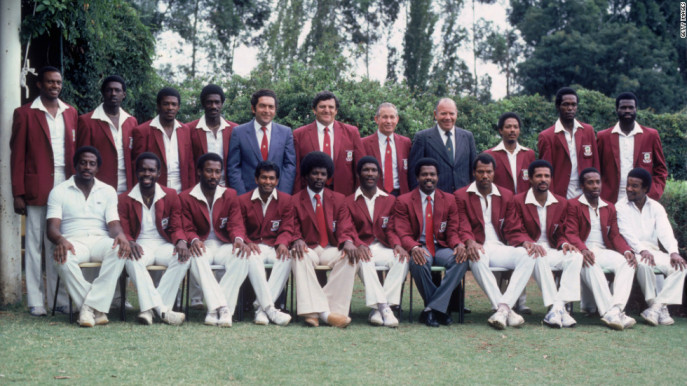
The rise of West Indies cricket in the 1970s was a sporting revolution. Under Clive Lloyd’s captaincy, the team forged a new identity: fast, fearless, and unapologetically Caribbean.
Their blueprint was simple yet devastating — bowl fast, hit hard, and never back down. Michael Holding, Andy Roberts, Joel Garner, and Malcolm Marshall formed a pace attack so intimidating that opposing batsmen often spoke of dread before the first ball was bowled. At the other end, Viv Richards swaggered to the crease, Gordon Greenidge and Desmond Haynes laid ironclad foundations, and Lloyd himself provided leadership and firepower in the middle order.
This combination produced a dynasty. Between 1982 and 1995, the West Indies went unbeaten in 29 Test series — a record that still stands. In ODIs, they lifted the first two Cricket World Cups in 1975 and 1979, cementing their place as global giants.
Cultural Impact: More Than Just a Game
Victories on the field translated into unity across the Caribbean. For nations emerging from colonialism, every win carried deeper meaning: it was the islands against the world. Their style of play — fearless, flamboyant, joyful — wasn’t just cricket; it was identity.
Around the globe, fans tuned in not just to watch a team win, but to witness a spectacle. The West Indies became cricket’s entertainers and enforcers rolled into one, redefining the sport’s rhythm and appeal.
Pillars of Excellence: The Icons Who Defined an Era
The Terrors of Pace
Andy Roberts: The pioneer of aggression, showing what West Indian quicks could become.
Michael Holding (“Whispering Death”): Effortless stride, searing pace, pure elegance.
Joel Garner (“Big Joel”): At 6’8”, his yorkers were nearly unplayable.
Malcolm Marshall: A master craftsman, widely hailed as the finest fast bowler of them all.
Courtney Walsh: Relentless and consistent, one of the great survivors.
Curtly Ambrose: Towering, ruthless, and capable of destroying batting orders in a single spell.
The Master Batsmen
Viv Richards: The “Master Blaster,” fearless and dominant, redefining batting swagger.
Clive Lloyd: The captain who led with vision and middle-order firepower.
Gordon Greenidge & Desmond Haynes: The opening duo who gave solidity and aggression in equal measure.
Brian Lara: A modern genius, holder of cricket’s highest individual Test score (400*), whose artistry kept the Caribbean flame alive long after the golden age.
The All-rounders and Spinners
Sir Garfield Sobers: Often called the greatest cricketer ever — able to bat like a king, bowl pace or spin, and field like no other.
Lance Gibbs: The off-spinner who added guile to West Indies’ firepower.
These legends didn’t just play cricket — they set standards the world still measures against.
The Fall: Modern Challenges and Shifting Fortunes
When the golden era faded, cracks began to show. Several factors fueled the decline:
Player exodus to T20 leagues: The lure of global franchise cricket often outweighs national duty, weakening Test and ODI squads.
Administrative struggles: Governance issues within Cricket West Indies (CWI) have hampered development and planning.
Broken pathways: Grassroots and youth systems failed to consistently produce players ready for the highest level.
The result? Once feared in Tests, the West Indies slipped to mid-table mediocrity. In ODIs, inconsistency became the norm.
Yet, in the T20 format, Caribbean flair found a new home. West Indies became the first team to win two T20 World Cups (2012 and 2016), reminding the world of their natural power. But even this success raised questions: was cricket becoming entertainment over discipline?
The Road to Revival
Despite setbacks, hope burns bright. Efforts are underway to reclaim glory:
Grassroots Development: Regional academies, stronger school competitions, and structured coaching are nurturing talent from the ground up.
Player Welfare & Management: Recognizing the mental and physical demands of the modern game, new systems aim to keep players motivated and available.
Fan & Diaspora Engagement: The Caribbean diaspora worldwide remains passionate. Strengthening these bonds could boost both finances and morale.
The building blocks are being laid. Stars like Shai Hope, Nicholas Pooran, and Jason Holder represent a generation determined to carry the legacy forward.
Conclusion: Spirit Unbroken
West Indies cricket is more than a memory of dominance; it’s a living, breathing spirit. From Sobers to Lara, from Holding’s thunderbolts to Richards’ swagger, the Caribbean has given the game its soul.
The golden era may be gone, but the dream of revival is alive. With investment, unity, and belief, the West Indies can rise again. For cricket fans everywhere, that’s a future worth hoping for — because when the men in maroon are at their best, the game itself feels richer.
The heartbeat of Caribbean cricket still pounds. The world is waiting for its next great chapter.
In the summer of 1983, shockwaves rippled through the Caribbean and beyond. A group of West Indian cricketers — some household names, others fringe hopefuls — boarded planes to Johannesburg. Their destination was not another Test tour of England or Australia, but South Africa: a nation locked under the iron grip of apartheid, isolated from the sporting world by near-universal boycott.
The news struck like betrayal. The Caribbean, then riding high on West Indies’ dominance of world cricket, reacted with fury. The West Indies Cricket Board (WICB) moved swiftly, banning the players for life. Fans who once roared for Lawrence Rowe’s elegance or Colin Croft’s thunderbolts now spat words like “traitor.” Anti-apartheid groups condemned them outright. What had driven these men to risk everything? The answer lay in a complicated mix of money, opportunity, and disillusionment.
The Lure of the Rand: Money, Cricket, and Controversy
For most of the rebels, the decision was brutally simple: money. South African promoters dangled contracts worth $100,000–$120,000 USD, a fortune compared to what West Indian cricketers earned then. International cricket in the 1980s paid little, and even stars often struggled to secure their futures. A few weeks in South Africa promised financial security that the maroon cap could not.
There was also the promise of cricket itself. South Africa, though segregated and internationally banned, still boasted world-class facilities and a hunger for top-level competition. For fringe players overlooked at home, the rebel tour offered a rare chance to test themselves in an elite environment.
But the political stakes could not be ignored. By agreeing to tour, the rebels not only defied the boycott — they appeared to lend legitimacy to a regime built on racial oppression.
The Political Firestorm
The response was immediate and unforgiving.
The WICB: Permanent bans, effectively exiling the rebels from ever wearing West Indies colors again. Careers that could have lasted years were cut short in a single announcement.
The ICC and other nations: Support for the sanctions, ensuring no backdoor return. English counties, once a lifeline for many West Indian professionals, closed their doors as well.
Public opinion: The harshest judge of all. Across the Caribbean, the players were branded mercenaries, accused of betraying not just their fans but the global fight against apartheid.
The label “rebel” stuck — and it carried a stain no amount of runs or wickets could wash away.
The Men Behind the Decision
The two tours (1982–83 and 1983–84) included 19 players, ranging from established internationals to near-unknowns:
Big names: Lawrence Rowe, Alvin Kallicharran, Colin Croft, Sylvester Clarke.
Journeymen and fringe players: Herbert Chang, David Murray, Emmerson Trotman, Everton Mattis, Albert Padmore, and others.
For fans, seeing stars like Rowe and Kallicharran — once the pride of West Indies batting — walk away was devastating. Their involvement gave the tour a legitimacy that cut deeper than if it had been filled only with fringe hopefuls.
Fallout: Careers Halted, Futures Lost
The impact was brutal and lasting.
International exile: None of the rebels played for the West Indies again. Careers that might have added depth to the all-conquering 1980s side instead ended in silence.
Lost county contracts: For many, England’s county circuit had been both livelihood and training ground. After the ban, counties refused to touch them.
Public shame: At home, the players carried the stigma of betrayal. Fans turned their backs, communities shunned them, and the rebel label followed them into retirement.
Some lives unraveled tragically. Richard Austin, once a gifted all-rounder, fell into addiction and homelessness. Others, like Sylvester Clarke, were remembered more for what might have been than for what they achieved.
The “What Ifs” of West Indies Cricket
The rebel bans robbed the Caribbean of immense talent. Imagine if Sylvester Clarke had joined Holding, Garner, and Marshall in the Test side. What if Franklyn Stephenson, later a legend in county cricket, had been unleashed as a West Indies all-rounder? Could Rowe, Croft, and Kallicharran have extended the dynasty even further?
Instead, the 1980s West Indies juggernaut marched on without them — dominant still, but forever missing those pieces.
Aftermath and Legacy
Over time, some fences were mended. A handful of bans were lifted quietly. Ezra Moseley even returned to play for the West Indies in the 1990s. Yet for most, reconciliation came too late to matter. The stigma lingered, shutting them out of coaching, commentary, and cricketing administration.
Today, history views the rebel tours with complexity. There is greater understanding of the players’ financial struggles — how poorly they were treated by boards compared to modern stars earning millions in IPL and T20 leagues. Yet condemnation remains. The tours are remembered less for cricket and more as a cautionary tale of sport entangled with politics.
Conclusion: A Heavy Price for a Controversial Choice
The 1983 rebel tours stand as one of the most painful chapters in West Indies cricket. For the players, the lure of quick riches turned into a lifetime of regret and exclusion. For the Caribbean, it was a wound that cut across sport, politics, and identity.
In the end, the rebels’ story is not just about cricket. It is about how athletes navigate impossible choices when the game they love collides with the world’s harshest realities. The lesson still echoes today: in sport, as in life, every decision carries a cost — and some costs last a lifetime.
In 1983, Caribbean cricket was shaken to its core. A group of West Indian players — some established stars, others fringe hopefuls — agreed to tour apartheid South Africa. At a time when the world had united in a sporting boycott of the racist regime, their decision sent shockwaves through cricket and society.
For the players, the lure was irresistible: money, opportunity, and a chance to play more cricket. But the cost was devastating — bans, isolation, and the permanent stain of being branded “rebels.” Four decades later, their story remains one of sport’s most controversial chapters.
The Allure of the Tour: Money, Opportunity, and Temptation
The Financial Carrot
The deals on offer were extraordinary for the time. Each player stood to earn between $100,000–$120,000 USD, far beyond what West Indies internationals could expect from match fees or endorsements. For many, cricket barely paid the bills. The South African contracts promised financial security in a career where futures were always uncertain.
More Than Just Money
For some, the chance to play high-level cricket was just as appealing. South Africa’s system was largely closed to non-white cricketers, but these tours promised competitive matches in unfamiliar conditions. A few players convinced themselves they were simply playing cricket, not endorsing politics. History, however, saw it differently.
The Political Firestorm
Swift and Ruthless Sanctions
The West Indies Cricket Board (WICB) wasted no time. Every player who joined the tour was banned for life from representing the West Indies. Their international careers ended overnight.
The International Cricket Council (ICC) and other boards supported the stance, shutting down avenues in English county cricket too. With one decision, these players went from professionals with bright futures to outcasts of the game.
Condemnation at Home and Abroad
The backlash across the Caribbean was ferocious. Fans, media, and anti-apartheid campaigners saw the tours as a betrayal of both their people and the global movement against racial oppression. The “rebel” label became permanent — a stigma that would follow them for decades.
The Rebels: Who They Were
The West Indies’ rebel squads, spread across two tours (1982–83 and 1983–84), included a mix of stars and lesser-known names:
Lawrence Rowe – once hailed as “the next Sobers,” a supremely gifted batsman.
Alvin Kallicharran – stylish left-hander and former West Indies captain.
Colin Croft – fearsome fast bowler from the golden era.
Sylvester Clarke – raw pace talent, considered unlucky not to play more Tests.
Franklyn Stephenson – brilliant all-rounder, later famed in county cricket.
Plus others like Richard Austin, Bernard Julien, David Murray, Emmerson Trotman, Monte Lynch, Collis King, and Ezra Moseley.
For stars like Rowe, Croft, and Kallicharran, the decision was shocking. For fringe players, it was perhaps their only shot at sustained top-level cricket. But whatever their motivations, history judged them together.
Careers Cut Short
International Dreams Shattered
The bans were absolute. None of the rebels played international cricket again. Rowe, Kallicharran, and Croft could have extended their Test careers during the West Indies’ peak years. Clarke might have become one of the fastest of his generation. Stephenson could have filled the void later taken by Carl Hooper or Roger Harper. Instead, the door closed forever.
County Cricket Doors Slammed Shut
English counties, under pressure to uphold the boycott, refused to sign most rebels. For cricketers who relied on those contracts for income, it was another blow. Only a handful, like Stephenson, managed to carve out reputations elsewhere.
Stigma, Struggles, and Divergent Paths
The “rebel” tag was more than just a sporting label. It carried social weight. Many of the players found themselves unwelcome in cricket circles, barred from coaching and commentary roles. Some, like Richard Austin, fell into tragic decline, battling poverty, addiction, and illness. Others faded quietly into obscurity.
A few rebuilt their careers outside the West Indies setup. Stephenson became a legend in county cricket. Monte Lynch eventually played for England. But the shadow of the rebel tours lingered — a constant reminder of choices made under difficult circumstances.
Looking Back: Legacy and Lessons
A Slowly Softening Stance
Decades later, some bans were quietly lifted, and a handful of players reconnected with Caribbean cricket in limited ways. Yet, no full reconciliation ever came. The bitterness, especially among fans who saw the tours as betrayal, never completely disappeared.
A Complicated History
Today, historians view the tours with nuance. The financial struggles of West Indian cricketers are better understood, as is the lack of support they received from their own board. But condemnation remains. Playing in apartheid South Africa, however lucrative, will always be remembered as a step too far.
Conclusion: The High Price of Crossing a Line
The rebel tours of 1983 remain one of the darkest episodes in West Indian cricket. For the 16 men involved, the rewards were immediate but fleeting. The consequences — bans, ruined reputations, and lasting stigma — defined their careers and their lives long after they stopped playing.
Their story is more than a cautionary tale of money versus morality. It is a reminder of how sport and politics are inseparable, and how athletes often carry the weight of decisions far larger than the game itself.
The West Indian Rebels of 1983: How Apartheid’s Shadow Shaped Their Cricketing Fates
In the summer of 1983, shockwaves rippled through the Caribbean and beyond. A group of West Indian cricketers — some household names, others fringe hopefuls — boarded planes to Johannesburg. Their destination was not another Test tour of England or Australia, but South Africa: a nation locked under the iron grip of apartheid, isolated from the sporting world by near-universal boycott.
The news struck like betrayal. The Caribbean, then riding high on West Indies’ dominance of world cricket, reacted with fury. The West Indies Cricket Board (WICB) moved swiftly, banning the players for life. Fans who once roared for Lawrence Rowe’s elegance or Colin Croft’s thunderbolts now spat words like “traitor.” Anti-apartheid groups condemned them outright. What had driven these men to risk everything? The answer lay in a complicated mix of money, opportunity, and disillusionment.
The Lure of the Rand: Money, Cricket, and Controversy
For most of the rebels, the decision was brutally simple: money. South African promoters dangled contracts worth $100,000–$120,000 USD, a fortune compared to what West Indian cricketers earned then. International cricket in the 1980s paid little, and even stars often struggled to secure their futures. A few weeks in South Africa promised financial security that the maroon cap could not.
There was also the promise of cricket itself. South Africa, though segregated and internationally banned, still boasted world-class facilities and a hunger for top-level competition. For fringe players overlooked at home, the rebel tour offered a rare chance to test themselves in an elite environment.
But the political stakes could not be ignored. By agreeing to tour, the rebels not only defied the boycott — they appeared to lend legitimacy to a regime built on racial oppression.
The Political Firestorm
The response was immediate and unforgiving.
The WICB: Permanent bans, effectively exiling the rebels from ever wearing West Indies colors again. Careers that could have lasted years were cut short in a single announcement.
The ICC and other nations: Support for the sanctions, ensuring no backdoor return. English counties, once a lifeline for many West Indian professionals, closed their doors as well.
Public opinion: The harshest judge of all. Across the Caribbean, the players were branded mercenaries, accused of betraying not just their fans but the global fight against apartheid.
The label “rebel” stuck — and it carried a stain no amount of runs or wickets could wash away.
The Men Behind the Decision
The two tours (1982–83 and 1983–84) included 19 players, ranging from established internationals to near-unknowns:
Big names: Lawrence Rowe, Alvin Kallicharran, Colin Croft, Sylvester Clarke.
Journeymen and fringe players: Herbert Chang, David Murray, Emmerson Trotman, Everton Mattis, Albert Padmore, and others.
For fans, seeing stars like Rowe and Kallicharran — once the pride of West Indies batting — walk away was devastating. Their involvement gave the tour a legitimacy that cut deeper than if it had been filled only with fringe hopefuls.
Fallout: Careers Halted, Futures Lost
The impact was brutal and lasting.
International exile: None of the rebels played for the West Indies again. Careers that might have added depth to the all-conquering 1980s side instead ended in silence.
Lost county contracts: For many, England’s county circuit had been both livelihood and training ground. After the ban, counties refused to touch them.
Public shame: At home, the players carried the stigma of betrayal. Fans turned their backs, communities shunned them, and the rebel label followed them into retirement.
Some lives unraveled tragically. Richard Austin, once a gifted all-rounder, fell into addiction and homelessness. Others, like Sylvester Clarke, were remembered more for what might have been than for what they achieved.
The “What Ifs” of West Indies Cricket
The rebel bans robbed the Caribbean of immense talent. Imagine if Sylvester Clarke had joined Holding, Garner, and Marshall in the Test side. What if Franklyn Stephenson, later a legend in county cricket, had been unleashed as a West Indies all-rounder? Could Rowe, Croft, and Kallicharran have extended the dynasty even further?
Instead, the 1980s West Indies juggernaut marched on without them — dominant still, but forever missing those pieces.
Aftermath and Legacy
Over time, some fences were mended. A handful of bans were lifted quietly. Ezra Moseley even returned to play for the West Indies in the 1990s. Yet for most, reconciliation came too late to matter. The stigma lingered, shutting them out of coaching, commentary, and cricketing administration.
Today, history views the rebel tours with complexity. There is greater understanding of the players’ financial struggles — how poorly they were treated by boards compared to modern stars earning millions in IPL and T20 leagues. Yet condemnation remains. The tours are remembered less for cricket and more as a cautionary tale of sport entangled with politics.
Conclusion: A Heavy Price for a Controversial Choice
The 1983 rebel tours stand as one of the most painful chapters in West Indies cricket. For the players, the lure of quick riches turned into a lifetime of regret and exclusion. For the Caribbean, it was a wound that cut across sport, politics, and identity.
In the end, the rebels’ story is not just about cricket. It is about how athletes navigate impossible choices when the game they love collides with the world’s harshest realities. The lesson still echoes today: in sport, as in life, every decision carries a cost — and some costs last a lifetime.
Cricket’s all-rounder brings a special kind of magic to the field. These rare talents shine with both bat and ball, often changing a game’s direction with a single stroke or a wicked delivery. The West Indies, known for its fierce cricketing history, has given the world many such incredible players.
This article digs deep into the careers of the most impactful and celebrated all-rounders from the West Indies. We will look at their amazing skills with the bat, their clever bowling, and their overall influence on the sport. Ranking these legends is tough, but we will explore what made each one truly great.
The Golden Era Architects: Foundation of West Indies Dominance
Sir Garfield Sobers: The Undisputed King
Sir Garfield Sobers stands as the ultimate benchmark for cricket all-rounders, not just for the West Indies but globally. His name is spoken with reverence, a true master of the game. People often wonder if we will ever see someone as good again.
Batting Prowess and Style
Sobers’ batting was simply amazing, mixing elegance with raw power. He boasts an average over 57 in Test cricket, a clear sign of his consistent run-scoring. He could handle any bowling attack, making even the best bowlers look ordinary. His world-record 365 not out in 1958 showed his massive ability to dominate.
Bowling Versatility and Impact
What really set Sobers apart was his incredible bowling range. He could bowl left-arm fast-medium, then switch to left-arm orthodox spin, and even left-arm wrist-spin. This variety confused batsmen and got him many wickets across all cricket formats. His ability to adapt made him a captain’s dream.
Fielding Excellence and Captaincy
Sobers was also a brilliant fielder, quick and athletic, taking spectacular catches. He often led his team from the front, showing great leadership qualities. His presence on the field lifted the spirits of his teammates. He inspired everyone around him during the West Indies’ golden age.
Clive Lloyd: The Leader with the Bat and Ball
Clive Lloyd was more than just a player; he was the architect behind the West Indies’ dominant teams. He built a squad that struck fear into opponents, leading them to historic victories. His contributions with both bat and ball were key to this success.
Leading from the Front with the Bat
Lloyd’s batting was often crucial, especially when the team needed it most. He anchored the middle order, scoring big runs in high-pressure games. His powerful strokeplay and calm demeanor helped the West Indies set daunting totals or chase down tough targets. Who can forget his century in the 1975 World Cup final?
Impactful Medium-Pace Bowling
Many remember Lloyd for his captaincy and batting, but his medium-pace bowling was surprisingly effective. He often provided a useful option, breaking partnerships when needed. His ability to deliver tight overs and snag key wickets added another layer to his all-round game. He always gave his all for the team.
Inspirational Captaincy and Team Building
Lloyd’s leadership transformed West Indies cricket. He created a winning culture, pushing his players to be the best in the world. His tactical brilliance and ability to unite a diverse group of players made them unbeatable. He truly built a cricketing dynasty.
Post-Golden Era Giants: Continuing the Legacy
Richie Richardson: The Stylish Strokeplay and Reliable Medium Pace
Richie Richardson was a bridge between eras, carrying the torch with grace and skill. He stood out for his elegant batting and surprising effectiveness with the ball. His leadership helped the team navigate changing times.
Elegant Batting and Anchor Role
Richardson’s batting was a joy to watch, full of flowing strokes and calm precision. He often played the role of an anchor, scoring heavily and consistently for his team. His ability to build long innings was vital in many matches, setting a fine example for others. He made batting look easy.
Underrated Medium-Pace Contributions
While known for his bat, Richardson’s medium-pace bowling was a valuable asset. He chipped in with vital overs, often creating breakthroughs when other bowlers struggled. His wicket tally proves he was more than just a part-time option. He always put the team first.
Leadership and Transition
Richardson also took on the captaincy, guiding the West Indies through a period of change. He led with dignity and courage, helping new players find their feet. His efforts kept the team competitive as the “golden era” slowly faded. He showed true resilience.
Carl Hooper: The Enigmatic Talent
Carl Hooper was a player of immense talent, capable of turning a match on its head. He sometimes showed inconsistency, but his sheer skill was never in doubt. He left a lasting mark with his unique style.
Explosive Batting Potential
Hooper possessed an amazing ability to score runs quickly, often with a flair that thrilled fans. He could hit huge sixes and play match-winning innings when he was in full flow. His batting was a treat, full of power and clean hitting. He certainly knew how to entertain.
Off-Spin Wicket-Taking
As an off-spinner, Hooper was a genuine wicket-taker, especially on pitches that offered some turn. He bowled with great control, often picking up crucial wickets during the middle overs. His bowling added great balance to the West Indies attack. He was a real asset.
Career Longevity and Influence
Hooper had a long and impactful career, playing for the West Indies for many years. He influenced many younger players with his calm approach and natural talent. His presence in the team was always a source of confidence. He truly was a unique player.
The Modern Era All-Rounders: Redefining Versatility
Brian Lara: The Batting Maestro with Bowling Support
Brian Lara is primarily known as one of cricket’s greatest batsmen, a true genius with the willow. Yet, he also contributed to the team with his bowling, adding another dimension to his game. His all-round skills were truly exceptional.
Unmatched Batting Records and Flair
Lara’s batting records speak for themselves, including the highest individual scores in Test and first-class cricket. He played with a captivating flair, hitting boundaries all around the ground. His ability to single-handedly win games was unmatched. He carried the hopes of a nation.
Handy Leg-Spin and Support Bowling
Though not his main skill, Lara could bowl useful leg-spin. He often provided a change of pace, sometimes breaking partnerships when least expected. His clever variations could trouble batsmen, adding a different option to the captain’s plans. He was a versatile player.
Captaincy and Match-Winning Influence
Lara also captained the West Indies, leading with his bat more than anything. His incredible talent inspired his teammates and thrilled fans worldwide. He always played with passion and a desire to win. His impact on the game is simply legendary.
Dwayne Bravo: The T20 Specialist and All-Round Powerhouse
Dwayne Bravo has changed with the times, becoming a dominant force, especially in T20 cricket. His evolution into an all-round powerhouse has seen him excel globally. He truly understands the modern game.
Innovative Batting and Power Hitting
Bravo is known for his explosive batting, particularly in the closing overs of an innings. He uses smart shots and brute force to score quickly. His ability to hit boundaries at will makes him a fearsome opponent. He has revolutionized T20 batting.
Skilled Medium-Fast Bowling and Variations
With the ball, Bravo is a master of variations, using slower balls, yorkers, and cutters. His medium-fast bowling is highly effective in T20 matches, often picking up wickets at key moments. He has a clever cricketing brain.
Fielding Prowess and T20 Captaincy
Bravo is also an outstanding fielder, athletic and quick across the ground. He takes spectacular catches and makes vital run-outs. He has successfully captained many T20 franchise teams, proving his leadership skills. He is a complete package.
Andre Russell: The Unpredictable Game-Changer
Andre Russell is a modern-day phenomenon, known for his sheer power and match-winning antics. He can change the game’s momentum in just a few balls. Few players hit the ball harder than “Dre Russ.”
Devastating Batting and Six-Hitting Ability
Russell’s batting is about raw power and clearing the ropes with ease. He is one of the most feared hitters in T20 cricket, able to score at an incredible rate. When he gets going, few can stop him. He is a nightmare for bowlers.
Express Pace Bowling and Key Wickets
With the ball, Russell bowls with genuine pace, often delivering fast and dangerous spells. He can take crucial wickets, especially in the middle overs, breaking partnerships. His bowling adds aggression and firepower to any team. He makes things happen.
Explosive Fielding and Impact Plays
Russell’s athleticism shines in the field, where he pulls off incredible catches and saves vital runs. He is always involved in the action, creating game-changing moments. His energy inspires his teammates. He is a true superstar.
The Unsung Heroes and Emerging Talents
Emerging All-Rounders to Watch
The West Indies continues its hunt for the next great all-round talent. Younger players are now stepping up, showing promise with both bat and ball. The future looks bright for these developing stars.
Current Prospects and Potential
Look out for players like Jason Holder, who already shows great skill and leadership. Romario Shepherd also brings a mix of pace bowling and powerful hitting. These players work hard to hone their all-round abilities. They could be the next big names.
Conclusion: The Enduring All-Rounder Legacy
West Indies cricket has a legendary history, thanks in large part to its amazing all-rounders. From the unmatched brilliance of Sir Garfield Sobers to the modern power of Andre Russell, these players have always been special. They bring a unique blend of batting, bowling, and fielding skills that define their success.
The appeal of the West Indies all-rounder continues strong. These players not only win games but also inspire future generations with their daring play. Their influence on cricket is deep, reminding us all what makes the sport so exciting. We cannot wait to see who rises next from the Caribbean.





Leave a Reply