The Third Umpire

Where Caribbean Cricket Meets Global Conversation.

Menu
  • Get Started Here
  • Join the Conversation
    • About
    • THINGS I LOVE TO DO
    • Did You Know
  • Third Umpire Blog
  • Our Services
    • Life Coaching & Stress Management
    • Get In Touch With Us
  • Shop Best Sellers
  • World Cup Football Facts
Menu

Tag: test cricket

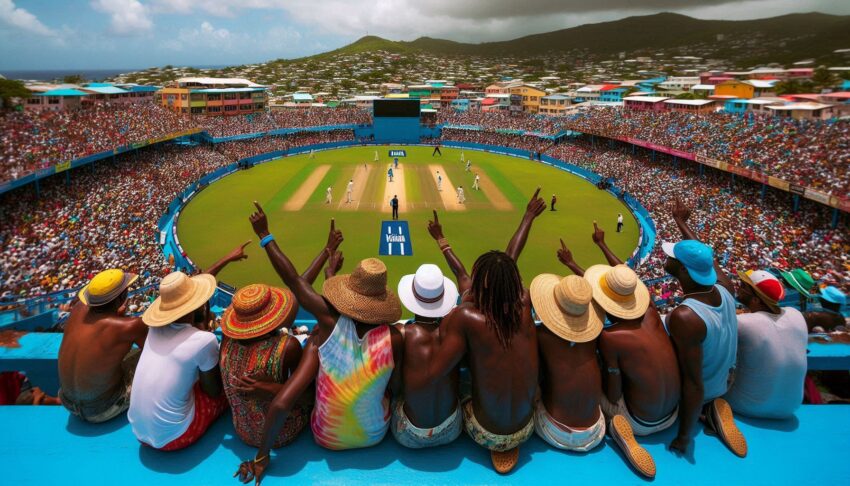
🏏The Caribbean Islands Ranked by Their Greatest Test Players

Posted on September 12, 2025September 22, 2025 by Harold Gittens

🥇 1. Barbados – The Cricketing Powerhouse

Barbados has produced the largest number of world-class Test cricketers, covering every era of West Indies cricket.
Legends from Barbados:

  • Sir Garfield Sobers – the greatest allrounder of all time
  • Sir Frank Worrell, Sir Clyde Walcott, Sir Everton Weekes (The Three Ws)
  • Malcolm Marshall – fearsome fast bowler
  • Joel Garner – “The Big Bird”
  • Gordon Greenidge & Desmond Haynes – iconic opening pair
  • Wes Hall, Charlie Griffith, Kemar Roach

Barbados is unmatched in depth and consistency.


🥈 2. Jamaica – Land of the Black Bradman and Fast Men

Jamaica has given the world some of the most elegant batsmen and quickest bowlers.
Legends from Jamaica:

  • George Headley – “The Black Bradman”
  • Michael Holding – “Whispering Death”
  • Courtney Walsh – record-breaking fast bowler
  • Chris Gayle – explosive Test and T20 opener
  • Lawrence Rowe – stylish but unfulfilled talent

Jamaica is second only to Barbados in terms of impact.


🥉 3. Trinidad & Tobago – Batting Flair and Spin Craft

Trinidad has a rich legacy of elegant stroke-makers and tricky spinners.
Legends from T&T:

  • Brian Lara – world record holder (375 & 400*)
  • Sonny Ramadhin – spin pioneer
  • Ian Bishop – strike fast bowler of the 1990s
  • Deryck Murray – reliable wicketkeeper
  • Darren Bravo – stylish modern batsman

Lara alone puts T&T in the top three.


🏅 4. Guyana – Home of Elegant Stroke-Makers

Guyana has produced some of the most stylish and dependable batsmen in West Indies history.
Legends from Guyana:

  • Clive Lloyd – captain of the invincible 1970s/80s side
  • Rohan Kanhai – innovative batsman, Lara’s idol
  • Alvin Kallicharran – classy left-hander
  • Shivnarine Chanderpaul – 11,000+ Test runs
  • Lance Gibbs – legendary off-spinner

Guyana’s influence on batting and leadership is enormous.


🏅 5. Antigua & Barbuda – Small Island, Big Impact

Despite its small size, Antigua has punched far above its weight.
Legends from Antigua:

  • Sir Vivian Richards – the most dominant batsman of his era
  • Sir Andy Roberts – master of fast bowling variations
  • Curtly Ambrose – one of the greatest fast bowlers ever
  • Richie Richardson – stylish stroke-player and captain

Few islands can match Antigua’s pound-for-pound impact.


🏅 6. St. Lucia, St. Vincent, Dominica, Grenada (Windward Islands)

Though smaller in number, these islands have produced gems.

  • Darren Sammy (St. Lucia) – inspirational captain in T20s
  • Winston Davis (St. Vincent) – ODI hat-trick man
  • Shane Shillingford (Dominica) – spinner
  • Junior Murray (Grenada) – wicketkeeper

Their Test legacy is smaller but still valuable.


🏆 Final Ranking

  1. Barbados – The most consistent and deepest pool of legends
  2. Jamaica – The Black Bradman + elite fast bowlers
  3. Trinidad & Tobago – Brian Lara and spin pioneers
  4. Guyana – Clive Lloyd, Chanderpaul, and stylish batsmen
  5. Antigua & Barbuda – Viv Richards, Ambrose, and Roberts
  6. Windward Islands (St. Lucia, St. Vincent, etc.) – fewer, but notable contributors.
Leave a Reply Cancel reply

Your email address will not be published. Required fields are marked *

Keep Updated Subscribe to Our Blog

Don't Want to Miss an Article Subscribe to Stay Updated.

Subscribe to Keep Updated
Loading...

🏏Let’s Go Down Memory Lane: The 1960 Tied Test at the Gabba in Brisbane Australia

Posted on September 11, 2025September 29, 2025 by Harold Gittens

The first test between Australia and the West Indies in the series was play at the Gabba in Brisbane. The year was 1960, quite a long time ago. I was one year old so I dont think my memory cells were sufficiently developed to have a clue that there was even a game called cricket.

Many cricket fans who would have read about this game or heard from their parents would agree with their take on that match. Many say it was and still is; one the the greatest matches ever played.

The two captains Richie Benaud and Frank Worrell each declared that the game was the most exciting match in which they have ever played. Sir Donald Bradman who was chairman of the Australian Cricket Board describe the game as “the greatest and most exciting of all time.”

Here’s how that day in 1960 and the game unfolded:

The Brisbane Cricket Ground, December sun blazing down. A sea of 90,000 voices surged, knowing they were witnessing something that would echo through time. The West Indies, led by the regal Frank Worrell, carried not just skill but a sense of pride, grace, and steel. Facing them, Australia under the wily Richie Benaud, determined, calculating, and unwilling to let history slip away.

West Indies’ first innings:

The calypso flair was on full display. Conrad Hunte stroked a polished 116, while the majestic Garry Sobers, young but already a phenomenon, carved 132 with strokes that dripped with brilliance. Wes Hall, tall and terrifying, later charged in with thunderbolts, his pace shaking the Australians to their core.

Australia’s reply:

Enter Norm O’Neill — stylish, unflappable. His 181 was an innings of silk and steel, carrying Australia within touching distance of parity. Alan Davidson, limping, bruised, but lion-hearted, fought for every run, a man refusing to yield to pain.

The climax — Australia’s chase of 233 in the fourth innings:

The crowd crackled with tension. Worrell marshalled his men like a general at war. Hall, exhausted but possessed by fire, bowled over after over, his shirt clinging to his back. Benaud countered with daring cuts and drives, eyes blazing with resolve.

The scoreboard tightened. Australia edged closer. Davidson, again the warrior, lashed boundaries despite his injuries. Every wicket was greeted by roars, every boundary by gasps. The clock, the crowd, the players — all seemed to pulse as one.

And then, the final over. Australia needed 6 runs, 1 wicket in hand. Hall pounding in, sweat pouring, his legs barely carrying him. Davidson was run out. The scores level. One wicket left. The very next ball — Hall thundered in, a blur, the crowd holding its breath. Ian Meckiff pushed, scampered, and chaos erupted — run out!

The scoreboard froze: Australia 232 all out. Match tied.

Not victory, not defeat. Something rarer. Something immortal. Players from both sides, exhausted and exultant, embraced in the middle. In that moment, cricket had written poetry in sweat, dust, and courage.

The cast of immortals that day:

• West Indies: Frank Worrell (c), Conrad Hunte, Rohan Kanhai, Garry Sobers, Joe Solomon, Gerry Alexander (wk), Denis Atkinson, Wes Hall, Alf Valentine, Sonny Ramadhin, Roy Gilchrist.

• Australia: Richie Benaud (c), Bob Simpson, Colin McDonald, Norm O’Neill, Neil Harvey, Wally Grout (wk), Alan Davidson, Ken Mackay, Lindsay Kline, Ian Meckiff, Garth McKenzie.

Was it the greatest match ever played? What are your memories of the game?

Leave a Reply Cancel reply

Your email address will not be published. Required fields are marked *


Keep Updated Subscribe to Our Blog

Don't Want to Miss an Article Subscribe to Stay Updated.

Subscribe to Keep Updated
Loading...

Read More Subscribe

🏏Unsung Heroes of Caribbean Cricket – Part 2

Posted on September 9, 2025February 7, 2026 by Harold Gittens

The West Indies cricket legacy isn’t built only on the famous names like Sobers, Richards, Lara, and Holding. Behind the legends stand dozens of cricketers who carried the flag with quiet dignity, giving their all even if history books rarely mention them. In this second edition of Unsung Heroes of Caribbean Cricket, we spotlight a handful of players who deserve their share of recognition.


Richard Gabriel

A right-handed batsman from Trinidad & Tobago, Richard Gabriel’s international career was brief—he played two Tests in 1984. Yet, his selection came at a time when West Indies cricket was packed with batting giants, which shows just how much talent he possessed. Gabriel was also known as a steady performer in regional cricket, always ready to anchor an innings.


Leonard Baichan

The stylish Guyanese left-hander Leonard Baichan made his Test debut in 1975 against Pakistan and scored a patient 105 not out. Despite that brilliant start, he never cemented his place in a batting order crowded with world-class names. His grit and elegance made him a local hero, even if he remains one of the “forgotten centurions” of West Indies cricket.


Basil Williams

From Jamaica came Basil Williams, a gutsy opener who played in the late 1970s and early 80s. He is remembered for scoring a century on Test debut against Australia in 1978—a rare achievement. Williams was also a fighter during the Packer era, holding his own against top-class attacks when the West Indies needed stability.


Clayton Lambert

Clayton Lambert’s story spans both ends of a career—he represented the West Indies in the 1990s, then later Guyana again in the 2000s, even making a comeback at 42 to play for the United States. Known for his aggressive left-handed batting, Lambert was a fearless stroke-maker who never shied away from taking on the best bowlers.


Faoud Bacchus

Another Guyanese talent, Faoud Bacchus, is remembered for his elegant batting and his ability to grind out long innings. His finest hour came against India in 1979, when he scored a memorable 250 in Delhi. Though his Test career was short, Bacchus showed glimpses of class that could have flourished in a different era.


Stuart Williams

Stuart Williams of St. Kitts was a loyal servant to West Indies cricket during the 1990s and early 2000s. Though he never became a superstar, he was a dependable top-order batsman who often weathered the storm against tough new-ball attacks. His 128 against Zimbabwe in 1997 remains a standout innings.


Geoffrey Greenidge

Geoffrey Greenidge of Barbados had a short Test career in the early 1970s, playing five matches. A technically sound opener, he was seen as a bright prospect, but his international journey ended early due to political controversy after he played in South Africa during the apartheid era. Despite this, he remained a respected figure in regional cricket circles.


Continue reading “🏏Unsung Heroes of Caribbean Cricket – Part 2”

🏏 The Test Player vs. The T20 Player: A Skills Comparison

Posted on September 2, 2025September 13, 2025 by Harold Gittens

Cricket has always been called a “gentleman’s game,” but as formats have evolved, so have the demands on players. A century in a five-day Test match and a whirlwind 30 off 10 balls in a T20 game are both celebrated, but they come from vastly different skill sets.

So, what exactly separates a Test match specialist from a T20 master? Let’s break it down.


1. Batting Skills

  • Test Player
    • Built for patience and resilience.
    • Mastery of technique—tight defense, leaving the ball well, shot selection under pressure.
    • Focuses on occupying the crease for long hours.
    • Examples: Cheteshwar Pujara, Kraigg Brathwaite, Steve Smith.
  • T20 Player
    • Built for aggression and innovation.
    • Big-hitting range—reverse sweeps, scoops, ramps, and switch-hits.
    • Strike rotation is as crucial as boundary-hitting.
    • Examples: Chris Gayle, Andre Russell, Suryakumar Yadav.

Comparison:
Where the Test batter looks to “survive and build,” the T20 batter looks to “attack and maximize every ball.”


2. Bowling Skills

  • Test Bowler
    • Relies on consistency, patience, and endurance.
    • Uses swing, seam, and subtle variations to outthink the batter.
    • Plans dismissals over long spells.
    • Examples: James Anderson, Kemar Roach, Ravichandran Ashwin.
  • T20 Bowler
    • Relies on variety and deception.
    • Mixes pace, yorkers, slower balls, and wide deliveries.
    • Needs nerves of steel at the death overs.
    • Examples: Rashid Khan, Sunil Narine, Jasprit Bumrah.

Comparison:
The Test bowler hunts with patience like a chess player, while the T20 bowler plays a high-speed poker game where one wrong delivery can cost the match.


3. Mental Approach

  • Test Player: Mindset of patience, discipline, and endurance. Ability to stay focused through long sessions and shifting conditions.
  • T20 Player: Mindset of aggression, adaptability, and split-second decision-making under pressure.

4. Physical Demands

  • Test Cricket: Stamina and fitness for long hours—running between wickets, bowling 20+ overs in a day, fielding for five days straight.
  • T20 Cricket: Explosiveness and athleticism—sprinting, diving, powerful shots, and delivering yorkers under fatigue.

5. Tactical Awareness

  • Test Player: Reads the game over sessions. Strategic declarations, field settings, and pacing the innings matter.
  • T20 Player: Thinks ball by ball. Field placements, match-ups (left-hand vs. right-hand, pace vs. spin), and run-rates dominate tactics.

⚖️ Balanced View

Neither format is “easier” than the other—they simply demand different strengths. Some rare players, like Virat Kohli, Ben Stokes, or Kane Williamson, manage to adapt across formats. But for most, excelling in one means tailoring their skills and mindset accordingly.


✨ Final Thought

A Test player is like a marathon runner, pacing themselves with endurance and technique. A T20 player is like a sprinter, relying on bursts of power and creativity.

Both are masters in their own arenas, and together, they make cricket the most diverse sport in the world—where patience and flair coexist.

Leave a Reply Cancel reply

Your email address will not be published. Required fields are marked *

Share This Post

Subscribe to stay updated to all Things Cricket and More!

Subscribe

West Indies Cricket: A Legacy of Power, Passion, and the Road to Revival

Posted on September 1, 2025February 19, 2026 by Harold Gittens

The mere mention of West Indies cricket conjures images of fearless fast bowlers steaming in under the Caribbean sun, flamboyant batsmen carving boundaries with swagger, and a dominance that shook the cricketing world. From the golden era of the 1970s and 80s, when they were virtually unbeatable, to the challenges of the modern landscape, West Indies cricket remains one of the sport’s most captivating stories.

But this is more than just cricket. For the Caribbean, it is a cultural phenomenon that unites a diverse region, instills pride, and inspires generations. To understand today’s struggles and hopes, we must revisit the power of its legacy — and the road to revival.


The Golden Era: Fear, Flair, and Total Dominance

The rise of West Indies cricket in the 1970s was a sporting revolution. Under Clive Lloyd’s captaincy, the team forged a new identity: fast, fearless, and unapologetically Caribbean.

Their blueprint was simple yet devastating — bowl fast, hit hard, and never back down. Michael Holding, Andy Roberts, Joel Garner, and Malcolm Marshall formed a pace attack so intimidating that opposing batsmen often spoke of dread before the first ball was bowled. At the other end, Viv Richards swaggered to the crease, Gordon Greenidge and Desmond Haynes laid ironclad foundations, and Lloyd himself provided leadership and firepower in the middle order.

This combination produced a dynasty. Between 1982 and 1995, the West Indies went unbeaten in 29 Test series — a record that still stands. In ODIs, they lifted the first two Cricket World Cups in 1975 and 1979, cementing their place as global giants.


Cultural Impact: More Than Just a Game

Victories on the field translated into unity across the Caribbean. For nations emerging from colonialism, every win carried deeper meaning: it was the islands against the world. Their style of play — fearless, flamboyant, joyful — wasn’t just cricket; it was identity.

Around the globe, fans tuned in not just to watch a team win, but to witness a spectacle. The West Indies became cricket’s entertainers and enforcers rolled into one, redefining the sport’s rhythm and appeal.


Pillars of Excellence: The Icons Who Defined an Era

The Terrors of Pace

  • Andy Roberts: The pioneer of aggression, showing what West Indian quicks could become.
  • Michael Holding (“Whispering Death”): Effortless stride, searing pace, pure elegance.
  • Joel Garner (“Big Joel”): At 6’8”, his yorkers were nearly unplayable.
  • Malcolm Marshall: A master craftsman, widely hailed as the finest fast bowler of them all.
  • Courtney Walsh: Relentless and consistent, one of the great survivors.
  • Curtly Ambrose: Towering, ruthless, and capable of destroying batting orders in a single spell.

The Master Batsmen

  • Viv Richards: The “Master Blaster,” fearless and dominant, redefining batting swagger.
  • Clive Lloyd: The captain who led with vision and middle-order firepower.
  • Gordon Greenidge & Desmond Haynes: The opening duo who gave solidity and aggression in equal measure.
  • Brian Lara: A modern genius, holder of cricket’s highest individual Test score (400*), whose artistry kept the Caribbean flame alive long after the golden age.

The All-rounders and Spinners

  • Sir Garfield Sobers: Often called the greatest cricketer ever — able to bat like a king, bowl pace or spin, and field like no other.
  • Lance Gibbs: The off-spinner who added guile to West Indies’ firepower.

These legends didn’t just play cricket — they set standards the world still measures against.


The Fall: Modern Challenges and Shifting Fortunes

When the golden era faded, cracks began to show. Several factors fueled the decline:

  • Player exodus to T20 leagues: The lure of global franchise cricket often outweighs national duty, weakening Test and ODI squads.
  • Administrative struggles: Governance issues within Cricket West Indies (CWI) have hampered development and planning.
  • Broken pathways: Grassroots and youth systems failed to consistently produce players ready for the highest level.

The result? Once feared in Tests, the West Indies slipped to mid-table mediocrity. In ODIs, inconsistency became the norm.

Yet, in the T20 format, Caribbean flair found a new home. West Indies became the first team to win two T20 World Cups (2012 and 2016), reminding the world of their natural power. But even this success raised questions: was cricket becoming entertainment over discipline?


The Road to Revival

Despite setbacks, hope burns bright. Efforts are underway to reclaim glory:

  • Grassroots Development: Regional academies, stronger school competitions, and structured coaching are nurturing talent from the ground up.
  • Player Welfare & Management: Recognizing the mental and physical demands of the modern game, new systems aim to keep players motivated and available.
  • Fan & Diaspora Engagement: The Caribbean diaspora worldwide remains passionate. Strengthening these bonds could boost both finances and morale.

The building blocks are being laid. Stars like Shai Hope, Nicholas Pooran, and Jason Holder represent a generation determined to carry the legacy forward.


Conclusion: Spirit Unbroken

West Indies cricket is more than a memory of dominance; it’s a living, breathing spirit. From Sobers to Lara, from Holding’s thunderbolts to Richards’ swagger, the Caribbean has given the game its soul.

The golden era may be gone, but the dream of revival is alive. With investment, unity, and belief, the West Indies can rise again. For cricket fans everywhere, that’s a future worth hoping for — because when the men in maroon are at their best, the game itself feels richer.

The heartbeat of Caribbean cricket still pounds. The world is waiting for its next great chapter.

Leave a Reply Cancel reply

Your email address will not be published. Required fields are marked *

September 1, 2025
Harold Gittens

Blogging all things cricket!

Harold Gittens

Hey! I'm Harold G

Harold M Gittens

My Voice in the Game We Love

I am a Sales Executive and Life Coach by profession, but at heart, I have always been a student and admirer of cricket. This game has given us unforgettable memories, uniting people across cultures, generations, and nations. Over the years, cricket has evolved—new formats have emerged, new heroes have risen—but at its core, it remains the game we love.

Through this platform, I want to add my voice to the conversation. Beyond scores and statistics, cricket is about stories, lessons, and the emotions it stirs in all of us. Here, I invite you to join me for meaningful discussions—about the sport’s past, present, and future. Together, we can celebrate the legends, debate the changes, and reflect on what cricket truly means to us as fans and as people.

Because cricket is not just a game. It’s a mirror of life itself—discipline, resilience, passion, and joy all rolled into one.

Coming Soon-Life Coaching & Stress Management

Motivational Quotes

"They may forget what you said buy they will never forget how you made them feel."

"Trust takes years to build, seconds to break and years to repair."

"The only person you should try to be better than is the person you were yesterday."

Recent Posts

  • Has the Present Brazil World Cup Team Lost the Flair of Past Teams
  • The Oldest Players at FIFA World Cup 2026
  • What West Indies Have Done Well So Far in the T20 World Cup and What will Keep the Momentum Going.
  • T20 World Cup 2026: Five Strategies that Can Help West Indies Win the Present T20 World Cup
  • Where Is the Plan? The Missing Ingredient in West Indies Cricket

The Third Umpire

The Oldest Players at FIFA World Cup 2026

The oldest players at the 2026 FIFA World Cup include several legendary veterans who are still representing their countries on the biggest stage. FIFA confirmed that Scotland goalkeeper Craig Gordon […]

Online Courses & Training

Teach English Online and around the Globe- World TESOL Academy

World TESOL Academy – Accredited TESOL/TEFL Certificate
IAP Career College
Affordable Online Certificate Courses at IAP Career College

TheTEFL Institute -Teach Online -TEFL Courses and Jobs

Amazon Deals

Amazon Echo Studio (newest model), compact design, immersive spatial audio and Dolby Atmos, Designed for Alexa+, Glacier White
PURE CHAMP Mens 3 Pack Fleece Active Athletic Workout Jogger Sweatpants for Men with Zipper Pocket and Drawstring - Size S-3XL

Privacy Policy

  • West Indies, New Zealand meet in Sobers' country to celebrate him
  • Garry Sobers dies, aged 89
  • Greaves and King return for final two ODIs against New Zealand
  • Lennox stars again as New Zealand take series lead after West Indies collapse
  • New Zealand bowl; West Indies bring in Shimron Hetmyer after long layoff

Menu

  • Get Started Here
  • Join the Conversation
    • About
    • THINGS I LOVE TO DO
    • Did You Know
  • Third Umpire Blog
  • Our Services
    • Life Coaching & Stress Management
    • Get In Touch With Us
  • Shop Best Sellers
  • World Cup Football Facts
Copyright ©2025 The Third Umpire. All Rights Reserved.