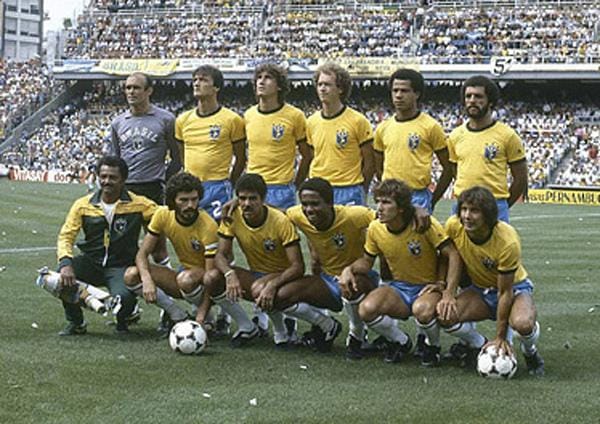
The oldest players at the 2026 FIFA World Cup include several legendary veterans who are still representing their countries on the biggest stage. FIFA confirmed that Scotland goalkeeper Craig Gordon is the oldest player in the tournament at 43 years, 162 days.
Top 10 Oldest Players at the 2026 FIFA World Cup
Rank
Player
Country
Age at Start of Tournament
1
Craig Gordon
Scotland
43 years
2
Cristiano Ronaldo
Portugal
41 years
3
Guillermo Ochoa
Mexico
40 years
4
Luka Modrić
Croatia
40 years
5
Manuel Neuer
Germany
40 years
6
Vozinha
Cape Verde
40 years
7
Edin Džeko
Bosnia and Herzegovina
40 years
8
Lionel Messi
Argentina
38 years
9
Tim Ream
United States
38 years
10
Axel Witsel
Belgium
37 years
10
Yuto Nagatomo
Japan
37 years
Interesting facts
Cristiano Ronaldo, Lionel Messi and Guillermo Ochoa are appearing in a record sixth World Cup.
Manuel Neuer became the oldest player ever to represent Germany at a major tournament at age 40.
Vozinha starred in Cape Verde’s historic 0–0 draw with Spain at age 40.
The oldest player in World Cup history remains Essam El Hadary, who played at age 45 in 2018.
Goalkeepers dominate the list because their position often allows them to remain effective well into their 40s.
West Indies finished the group stage unbeaten, winning all four of their matches and topping Group C as a result — a big confidence boost heading into the Super 8s.
• Consistent victories build belief and reduce pressure: once a team starts winning, players trust their processes more.
• Being undefeated gives them buffer room and mindset advantage going into tougher matches.
2. Leadership & Key Performances With the Bat
Captain Shai Hope has led from the front with back-to-back impactful innings, most recently a 75-run knock off 46 balls to set up the win against Italy.
A few things this highlights:
• Clutch batting when the team needs it most.
• The ability to calm the innings after early setbacks.
• A captain showing form inspires confidence across the squad.
3. Strong Bowling Support & Depth
In their latest match, the Windies bowling unit delivered a disciplined and effective performance, bowling Italy out for 123 with good contributions from pacers and spin alike (e.g., Shamar Joseph with 4/30 and Matthew Forde with 3/19).
Key takeaways:
• Bowlers have adaptability in conditions.
• Attack works as a cohesive unit, sharing responsibility.
• Combined pace and spin options create tactical flexibility.
YONHAN Battery Charger 20A 12V/24V LiFePO4 Lead Acid Fully Automatic Battery Maintainer, Car Battery Trickle Charger Automotive w/Repair, Winter Mode, for AGM, STD, Gel, Deep Cycle Batteries
NOCO Air AL5: Cordless Tire Inflator – Portable Rechargeable Air Compressor with USB-C – 17 LPM Inflates 0–40 PSI in 7 Minutes – Digital Gauge + Auto-Shutoff – For Tires up to 31-Inches
Even when they lost early wickets — including both openers early against Italy — the team has shown the ability to rebuild and regroup, with partnerships stabilising innings and keeping scoring rates healthy.
This shows:
• Resilience
• Mental adaptability
• Patience in innings construction — rare in T20 cricket
What They Need to Do to Continue Winning
1. Maintain Pressure & Intensity
As West Indies move into the Super Eight stage, the competition becomes tougher. They’ll need to:
• Stay aggressive without over-committing
• Maintain disciplined bowling plans
• Rotate bowlers effectively to control runs
Consistency matters more than flash moments at this stage.
2. Depth Beyond Key Players
So far, big contributions have come from Hope and a few others. To stay competitive:
• Middle-order batters must step up
• Lower order needs the ability to accelerate if required
This prevents over-reliance on just one or two performers.
3. Smart Game Management
Against top teams (e.g., England cricket team), execution under pressure has to be near flawless:
• Bowling changes at the right time
• Field placements that match tactics
• Handling crucial moments (powerplay, death overs)
This is where experience pays off — and West Indies have some in their ranks.
4. Physical Conditioning & Adaptation
The tournament is long and played in challenging conditions (India & Sri Lanka).
Keeping players:
• Fit
• Fresh
• Mentally sharp
…will be key as games pile up.
Summary: West Indies So Far
What they’ve done well:
Unbeaten group stage and confidence boost
Strong leadership with clutch batting
Collective bowling strength
Ability to rebuild innings under pressure
What they need to do next:
Spread contributions across the lineup
Maintain tactical discipline
Manage workload and conditions
Execute under pressure against higher-ranked teams
The West Indies won this tournament before, if they stick to the strategies and game plans no doubt they will keep winning and will lift the T20 World Cup 2026.
For a proud cricketing nation like the West Indies — and especially from a Caribbean perspective— the mission is clear: reclaim global white-ball dominance. Here are five practical, high-impact strategies that I am sure Darren Sammy and his team may have thought about. Application of these strategies could help the West Indies win the T20 World Cup 2026.
1️⃣ Build Around Power + Matchups (Smart Aggression)
The modern T20 game is about controlled explosiveness.
With players like ShaiHope, Rovman Powell, ShurfaneRutherford and Shimron Hetmyer, the West Indies must:
Attack the Powerplay without reckless collapse
Use left-right combinations to disrupt bowling plans
Target specific bowlers instead of blind hitting
Key idea: Data-driven matchups — don’t just send hitters, send the right hitter at the right time.
2️⃣Redefine the Bowling Strategy
Past West Indies dominance was built on fearsome bowling. In T20s, it must be built on variations and discipline.
Core assets:
Shamar Joseph – pace and bounce
Akeal Hosein – Powerplay control
Holder – experience + death overs
G Motie – Control spin bowling at the correct time
Recent tournaments have exposed one recurring weakness: finishing games.
With the bat:
Designate two fixed finishers
Practice 18th–20th over simulations under pressure
Encourage smart strike rotation before last over
With the ball:
Pre-plan overs 17–20 before the innings begins
Bowl to fields, not just lengths
Take the catches, no matter how difficult
Championship teams win the final four overs.
4️⃣ Select for Role Clarity, Not Reputation
Past T20 World Cup triumphs (2012, 2016) succeeded because roles were crystal clear.
The blueprint:
One anchor (if conditions demand)
Two Powerplay aggressors
Two middle-over enforcers
Two death specialists
Avoid:
Picking big names without defined jobs
Constant XI changes
Consistency builds tournament momentum.
5️⃣ Caribbean Mindset: Play Fearless, Not Emotional
West Indies cricket thrives on rhythm and confidence.
The leadership group must:
Keep dressing room energy positive
Block outside noise
Encourage expressive cricket
If someone like Hetmyer or Powell hits form early, the entire side lifts.
Remember: When West Indies play free, they become the most dangerous white-ball side in the world.
The above strategies are not new but why re-invent the wheel, as they say there is nothing new under the sun. The most important factor is have a plan and sticking with it, if its not going well try some alternative ideas but never give up trying to do your best.
🔥 The Winning Formula in One Line
Explosive top order + disciplined bowling + elite death execution + clear roles + fearless mindset = realistic title charge.
I am, and will always be, a fan of West Indies cricket. Whenever and wherever they’re playing, I’ll find the time to watch. Sometimes that means staying up late into the night, eyes fixed on the screen, hoping for that spark of brilliance that reminds us of the glory days.
And very often, there is that spark. A fiery opening spell, a quick burst of boundaries, a partnership that looks promising — and you think, “Yes, this is it. The boys are on top.”
But then, almost predictably, it all falls apart.
As a fan, sitting there analyzing the flow of the game, you can’t help but see a painful pattern: there’s no clear plan.
No Plan to Stay at the Wicket
Time and again, our batsmen get good starts but don’t convert them. Too often, there seems to be no plan to stay at the wicket, to build an innings, to grind through difficult spells. The idea of occupying the crease, of making the opposition bowlers work for every wicket, seems lost.
Cricket is a mental game as much as it is a physical one. Great batsmen watch the bowler closely, assess the conditions, and plan their response. They know when to attack, when to defend, and when to simply survive. Unfortunately, our players often look like they’re reacting ball by ball, not thinking ahead.
No Plan to Dominate
West Indies cricket was once built on intimidation — not arrogance, but controlled dominance. Viv Richards didn’t just bat; he imposed himself. Clive Lloyd’s teams played with intent. Even when the bowlers were on top, they fought to regain control.
Today, it feels as if that confidence and game awareness have vanished. Too often, our batsmen don’t seem to know which bowler to target, when to rotate the strike, or how to pressure the opposition. The game drifts — and before you know it, the advantage is gone.
No Tactical Discipline
The same lack of planning shows in our bowling and field placements. There are moments when a bowler hits the perfect rhythm, but then the field setting doesn’t back him up. Or a captain misses a simple change that could build pressure.
Modern cricket is driven by data, planning, and adaptability. Teams like India, Australia, and England study their opponents meticulously. Every batsman’s weakness, every bowling pattern is analyzed. For the West Indies, however, it often feels like we’re still relying on instinct rather than intelligence.
The Need for a Cricketing Brain Trust
What this team needs is not just talent — we have that — but strategy. A cricketing brain trust that helps players understand the game deeply. Young batsmen should be learning not just how to play shots, but how to build innings. Bowlers should know how to plan dismissals over multiple overs. Captains should have the confidence and cricketing intelligence to think two steps ahead.
It’s not about copying others — it’s about rediscovering that West Indian balance of flair and focus.
Playing with Purpose Again
The West Indies once represented a movement — a force that played with pride, discipline, and collective belief. We might never return to the exact glory of the past, but we can rebuild that purpose.
Cricket has evolved, yes, but the fundamentals remain unchanged: plan, execute, and adapt. Until the team embraces those principles again — until every player walks to the crease or marks a run-up with a plan in mind — the same frustrations will continue.
As fans, we’ll keep watching. We’ll keep hoping. Because despite the heartbreaks, there’s still that flicker of belief — that maybe, just maybe, one day the West Indies will find their plan again, and with it, their pride.
What are your thoughts? Do you see it that way as well! Leave your comments below.
When you think of the glory days of West Indies cricket — the swagger of Viv Richards, the menace of Holding and Marshall, the unity under Clive Lloyd — one can’t help but ask: What happened? And more importantly, can the spirit and strategies of that golden era guide the revival of West Indies cricket today?
The Past: A Blueprint for Dominance
In the 1970s and 80s, the West Indies didn’t just play cricket — they defined it. Their success wasn’t accidental. It was built on clear vision, discipline, and unity.
Clive Lloyd’s leadership, Frank Worrell’s philosophy of pride and purpose, and later Vivian Richards’ fearless example created a culture that blended raw talent with professionalism. The team was a symbol of Caribbean excellence — eleven men representing many islands, yet bound by a single goal: to be the best in the world.
They trained hard, competed harder, and carried the weight of regional pride on their shoulders. They didn’t play for money or franchise fame — they played for West Indies.
The Present: Fragmented and Searching
Fast forward to today, and the West Indies team struggles to find consistency in any format. There’s no shortage of talent — from Nicholas Pooran’s flair to Alzarri Joseph’s pace — but there’s a visible gap in direction, structure, and belief.
Franchise cricket has created opportunities but also divided loyalties. Domestic structures are weak, player development is inconsistent, and the regional cricket boards often lack unity of purpose.
The West Indies still produce stars, but not teams.
Learning from the Past
So, what can today’s administrators, coaches, and players learn from the vision of the old masters?
1. Unity Over Individualism
Lloyd, Richards, and Worrell built teams that thrived on collective pride. They turned regional differences into motivation. The current system must rediscover that sense of shared Caribbean identity — where the maroon cap means more than any franchise jersey.
A rebranded, reconnected regional cricket culture — with shared values and stronger cross-island collaboration — could rekindle the unity that once powered the West Indies machine.
2. Discipline and Professional Standards
The old West Indies team combined flair with fierce discipline. Players were proud professionals long before central contracts existed. Today, the board must reintroduce high-performance environments — fitness benchmarks, mentorship programs, and cricket academies that nurture discipline alongside skill.
The vision must move from participation to performance.
3. Investment in Fast Bowling and Youth
Clive Lloyd’s greatest innovation was building around pace. The Caribbean is still producing quicks, but they need structured development. A fast-bowling academy — like the one Dennis Lillee established in Australia — could once again make the West Indies feared for their pace battery.
At the youth level, regional academies should emphasize long-form cricket to rebuild the art of patience and technique — qualities that once made the West Indies the kings of Test cricket.
4. Leadership and Mentorship
In the golden era, players learned directly from legends. That generational handover has faded. It’s time to reconnect the dots. Imagine players like Brian Lara, Curtly Ambrose, and Shivnarine Chanderpaul guiding the next wave, not just as consultants, but as integral parts of the system.
Mentorship isn’t nostalgia — it’s strategy.
5. A New Vision for the Modern Game
While old strategies inspire, modern cricket requires adaptability. The vision must be forward-looking — embracing sports science, data analytics, and mental conditioning. The goal isn’t to recreate the past but to modernize the mindset that once made the West Indies invincible.
The Fire Still Burns
Despite the challenges, the spirit of Caribbean cricket remains alive. You can still see it in a Joseph yorker, a Pooran six, or a Shai Hope century under pressure. What’s missing is the structure, leadership, and unity to sustain that fire.
Rebuilding West Indies cricket won’t happen overnight. But if the administrators, coaches, and players can blend the old vision of pride and unity with modern professionalism and innovation, the Caribbean can rise again.
After all, fire never truly dies — it just needs to be reignited.
Few leaders in cricket history have transformed a team’s destiny quite like Clive Lloyd. Towering in stature and presence, both physically and mentally, Lloyd was more than just a captain — he was the architect of the West Indies’ golden era. Under his watch, the Caribbean team evolved from inconsistent entertainers into the most feared and respected side in world cricket. But was Clive Lloyd truly the greatest captain ever?
The Genesis of Fire
The early 1970s were turbulent years for West Indies cricket. Though the islands produced genius batsmen and fiery bowlers, the team often lacked unity and direction. The humiliating 5–1 loss to Australia in 1975–76, at the hands of Dennis Lillee and Jeff Thomson, became the turning point. Lloyd’s men were battered — physically and psychologically — but from those ashes rose a new fire.
It was then that Lloyd decided enough was enough. The West Indies would never be bullied again. He built a team that combined raw pace, flair, and mental fortitude. Out went the friendly island approach; in came professionalism, pride, and relentless aggression.
The Birth of a Dynasty
Under Lloyd’s leadership, the West Indies became an unstoppable force. The 1975 World Cup triumph signaled the beginning of a new era. With legends like Viv Richards, Gordon Greenidge, Desmond Haynes, Michael Holding, Andy Roberts, and Malcolm Marshall, Lloyd crafted a team that didn’t just win — they dominated.
From 1980 to 1995, the West Indies went unbeaten in Test series — a record that stands as one of cricket’s greatest achievements. And it all started under Lloyd’s vision of unity: multiple islands, one purpose.
Clive Lloyd wasn’t a flamboyant tactician like Ian Chappell or a master psychologist like Mike Brearley. His genius lay in people management. He led by example — calm in crisis, respectful yet firm, and fiercely protective of his players.
He gave his men belief — that West Indian cricketers weren’t just entertainers for foreign crowds, but champions who could dominate the world on their own terms. That belief echoed through every bouncer, every century, every victory lap.
As former fast bowler Colin Croft once said, “Clive Lloyd made us believe we were the best — and then he made sure we played like it.”
Tactics and Transformation
Lloyd’s decision to unleash a four-pronged pace attack revolutionized cricket. It wasn’t just strategy — it was philosophy. He knew that fast bowling was the Caribbean’s natural strength, and he harnessed it ruthlessly.
While other captains relied on spinners or swing bowlers, Lloyd turned raw speed into psychological warfare. His bowlers didn’t just take wickets; they broke spirits. Batting against the West Indies became an exercise in survival.
That tactical foresight made him a pioneer — one whose influence reshaped Test cricket forever.
Beyond Statistics: The Symbolism of Lloyd’s Captaincy
To measure Lloyd’s greatness by numbers alone is to miss the point. His captaincy symbolized much more — it was about Caribbean pride, racial identity, and global respect. In an era when West Indians faced prejudice both at home and abroad, Lloyd’s team became a living statement of excellence and equality.
The documentary Fire in Babylon captured it perfectly: the West Indies weren’t just playing cricket — they were fighting for dignity. And Lloyd was the general leading that revolution.
Was He the Greatest Ever?
That depends on how one defines greatness. Statistically, captains like Ricky Ponting, Steve Waugh, and Graeme Smith boast impressive records. Strategically, Mike Brearley and Imran Khan are often praised for their tactical nuance.
But in terms of transformation, unity, and cultural impact, Clive Lloyd stands in a class of his own. He didn’t just win matches — he rewrote history, turning a fragmented team into the most dominant unit the sport has ever seen.
If greatness is measured by legacy, leadership, and inspiration, then yes — Clive Lloyd may well be the greatest captain cricket has ever known.
What do you think? Was Clive LLoyd the greatest test captian of all time? Leave your thoughts below!
Cricket has always celebrated monumental batting feats, but nothing captures the imagination quite like a truly mammoth innings. Scoring a century is an achievement in itself, but these legends went far beyond, rewriting the record books with innings that stretched into the 400s and 500s. Many of the players on this list may be unknown to many of us but the list highlights the genius of Brian Lara to make it to the top. Let’s look at the top ten highest individual scores in first-class cricket—a list that showcases sheer skill, stamina, and history-making brilliance.
🏏 Top 10 Highest Individual Scores in First-Class Cricket
Brian Lara’s 501* remains untouchable three decades later, scored in just 427 balls with 62 fours and 10 sixes.
Hanif Mohammad’s 499 was heartbreakingly close to 500, but he was run out going for his 500th run.
Don Bradman’s 452* at the age of just 22 confirmed his genius and remains Australia’s highest first-class score.
W.G. Grace’s 400*, way back in 1876, was the first quadruple century in cricket history—a feat that set the tone for the generations that followed.
Bill Ponsford is the only man to appear twice in this elite list, with two scores of 400-plus for Victoria in the 1920s.
💡 Did You Know?
Brian Lara’s 501* came just a few weeks after he broke the world Test record with 375. Talk about being in form!
Hanif Mohammad batted for over 16 hours for his 499—one of the longest innings in cricket history.
Bradman’s 452* was scored in only 415 minutes—he barely wasted a delivery.
B.B. Nimbalkar’s 443* is still the highest score in Indian domestic cricket, and he was left stranded when the opposition conceded the match.
Bill Ponsford’s 437 was made on the famously flat Melbourne Cricket Ground pitch, where Victoria piled up a record 1107 runs.
Aftab Baloch was just 20 years old when he scored his 428—Pakistan never gave him a long run in Tests despite that knock.
K.S. Ranjitsinhji’s 421 was full of his trademark leg glances, a shot he is credited with perfecting.
Graeme Hick’s 405* made him the youngest triple-centurion in county cricket at the time.
W.G. Grace’s 400* in 1876 was revolutionary; before him, no one imagined such scores were even possible.
📖 Final Word
These innings are more than just numbers; they are stories of concentration, stamina, and dominance. To bat for hours (sometimes days), weather bowlers, and carry your team to a position of strength requires not just skill but incredible mental strength.
Every name here carved a legacy, ensuring their innings would be remembered as long as cricket is played.
Nicknamed “The World’s Best Slip Fielder” by many, Mark Waugh was silky smooth in the cordon. His ability to catch at second slip with minimal fuss was unmatched.
2. Rahul Dravid (India)
“The Wall” wasn’t just a run-machine — he pouched 210 Test catches, the most by a non-wicketkeeper. Dravid was especially brilliant against spinners, standing close at slip.
3. Jacques Kallis (South Africa)
One of cricket’s greatest all-rounders, Kallis had a pair of bucket hands. He made slip catching look easy, finishing with 200 Test catches.
4. Mark Taylor (Australia)
Before captaining Australia, Taylor was known for his safe hands at first slip. His sharp reflexes and reliability helped Australia’s dominant bowling attack thrive.
5. Brian Lara (West Indies)
The Prince of Port of Spain wasn’t just about dazzling batting. He was also an excellent slipper, especially to the fast bowlers. His anticipation stood out in a team stacked with pace greats.
6. Stephen Fleming (New Zealand)
The elegant Kiwi skipper was one of the best in the slip cordon. He often stood at second slip and held on to some remarkable catches.
7. Ricky Ponting (Australia)
Ponting combined athleticism with sharp anticipation. Whether at slip or in the gully, he rarely dropped chances. His presence gave bowlers huge confidence.
8. Graeme Smith (South Africa)
As captain and first slip, Smith was a rock. He had quick reactions and big hands, making him especially good at low catches.
9. Alastair Cook (England)
England’s all-time leading run-scorer also built a reputation as a safe slipper, particularly against spinners like Graeme Swann.
10. Mahela Jayawardene (Sri Lanka)
With 205 Test catches, Mahela is second only to Dravid among non-wicketkeepers. He was phenomenal at slip, especially to Muttiah Muralitharan’s spin.
✅ Special Mentions: Michael Clarke, Clive Lloyd, Shane Warne (in the slips to spinners), and Hashim Amla.
West Indies cricket has given the world some of the greatest players to ever walk onto a cricket field. Yet, as with any team, not every cricketer who wears the maroon cap leaves a lasting impact. Some players earned Test selection based on regional success or sheer potential, but struggled when faced with the rigors of the highest level.
Here, we look at five West Indian players whose Test careers didn’t quite match expectations, and whose places in the team were often questioned.
1. Phil Simmons
Phil Simmons is best remembered as a fearless ODI opener and later as a successful coach of the West Indies. But his Test record tells a different story. Despite his talent, Simmons managed only 1,002 runs from 26 Tests at an average of 22.26. Against quality pace and spin, his attacking style often backfired. While he deserved a chance, his long Test run remains puzzling compared to his limited-overs reputation.
2. Robert Samuels
The older brother of Marlon Samuels, Robert played six Tests as an opener in the mid-1990s. He showed grit with a half-century in the famous Bridgetown Test of 1996, where West Indies chased 311 against Australia. But his overall average of 26.71 highlighted his struggle to adapt at the top level. Many felt his selection was based more on potential than proven consistency.
3. Rajindra Dhanraj
For years, fans called for a quality wrist-spinner in West Indies cricket. Rajindra Dhanraj, a talented Trinidadian leggie, was finally given a Test chance in the mid-1990s. Unfortunately, he managed just 5 wickets in 4 Tests at a costly average. His selection always felt experimental, and in an era dominated by fearsome pace bowlers, he never received consistent backing to develop at the highest stage.
4. Gavin Tonge
An Antiguan fast bowler, Tonge earned his Test cap in 2009 against Australia. It turned into a baptism of fire. He bowled 36 overs but finished with figures of 1 for 113, looking out of depth against a strong Australian batting lineup. That was his only Test. Many argued that other pacers in the Caribbean deserved the nod ahead of him.
5. Xavier Marshall
Seen as a bright prospect in the early 2000s, Marshall had style and timing to spare. But at Test level, inconsistency plagued his career. Across 7 Tests between 2005 and 2009, he averaged just 18.11, and his temperament was constantly questioned. Despite several opportunities, he never translated his natural ability into big scores.
Final Thoughts
Cricket history often remembers the legends, but part of the story includes those who got a taste of Test cricket without ever fully belonging. Players like Simmons, Samuels, Dhanraj, Tonge, and Marshall remind us of the fine margins between regional dominance and international success.
Their careers may not be celebrated, but they remain part of West Indies’ rich tapestry — showing both the promise and the challenges of competing at the highest level.
The Caribbean has produced cricketing giants whose names echo across generations. Yet, beneath the towering legends lies a group of players who, though less celebrated, made meaningful contributions to West Indies cricket. This series highlights those “unsung heroes” — players who represented skill, resilience, and passion for the game, even if they never reached superstar status.
Alvin Greenidge
A stylish opening batsman from Barbados, Alvin Greenidge played only a handful of Tests in the late 1970s, overshadowed by the presence of Gordon Greenidge (no relation) and Desmond Haynes. Despite limited opportunities, his elegant stroke play showed glimpses of what could have been a longer international career.
Maurice Foster
The Jamaican all-rounder Maurice Foster had both batting skill and useful off-spin. His Test career was sporadic during the late 1960s and early 1970s, but he often played important roles for Jamaica in regional cricket, anchoring the middle order and providing balance with the ball.
Rolston Otto
From Antigua, Rolston Otto was a consistent performer for the Leeward Islands during the 1980s. A determined middle-order batsman, he never broke into the West Indies senior side, but his reliability at regional level made him a respected figure among his peers.
Winston Benjamin
An Antiguan fast bowler, Winston Benjamin came through during the late 1980s as part of the fierce West Indian pace tradition. Though not as menacing as Ambrose or Walsh, Benjamin’s accuracy and bounce earned him over 60 Test wickets. He later became a mentor for younger Antiguan players, including Curtly Ambrose.
Rafik Jumadeen
One of Trinidad and Tobago’s most notable left-arm spinners, Rafik Jumadeen played a single Test for the West Indies in 1972. At a time when pace dominated selection, his opportunities were scarce, but in regional cricket he was a constant threat, especially on turning tracks.
Clyde Butts
Guyana’s Clyde Butts was a steady off-spinner who played seven Tests in the 1980s. His international career was limited due to the West Indies’ fast-bowling supremacy, but he later contributed immensely as a selector, shaping the next generation of West Indian cricketers.
Robert Haynes
Known for his clever leg-spin and gritty batting, Jamaican Robert Haynes was a versatile all-rounder who represented the West Indies in ODIs during the late 1980s and early 1990s. He was among the few Caribbean leg-spinners to succeed at the regional level, paving the way for later wrist-spinners.
Robert Samuels
The brother of Marlon Samuels, Robert Samuels had a short but impactful Test career in the mid-1990s. A composed left-handed opener, he scored a crucial half-century in the famous Bridgetown Test of 1996, where West Indies chased down 311 against Australia. His calm presence provided stability in a fragile batting lineup.
Closing Thoughts
These men may not appear in cricket’s folklore alongside Richards, Sobers, or Lara, but their stories form part of the broader fabric of Caribbean cricket. They played with pride, carried their nations’ hopes, and left legacies that deserve to be remembered.
Leave a Reply